
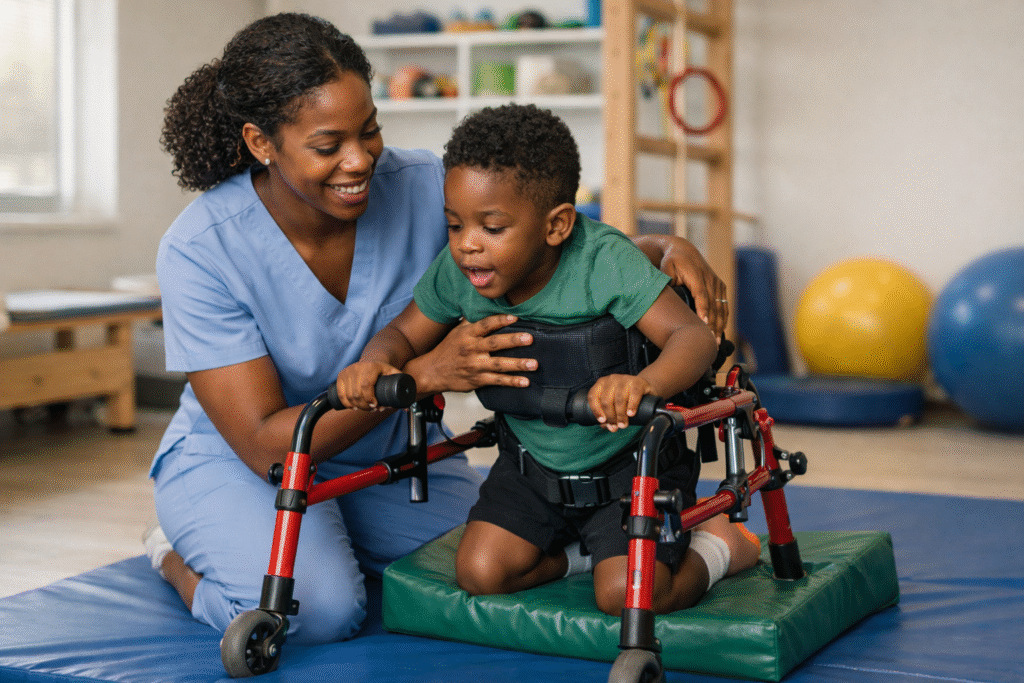
Cerebral palsy affects movement, posture, and muscle coordination, and for many families, it becomes clear early on that their child will need long-term support. In Nigeria, more parents are seeking practical, evidence-based care that helps children with cerebral palsy improve mobility, independence, and quality of life. One of the most effective interventions is physical therapy for children, especially when started early and delivered consistently.
This guide explains how cerebral palsy therapy works, the role of pediatric physiotherapy, and the rehabilitation strategies that truly make a difference for children and their families.
Understanding Cerebral Palsy in Children
Cerebral palsy is a neurological condition caused by damage to the developing brain, usually before or shortly after birth. It affects how the brain communicates with muscles, leading to challenges with movement, balance, coordination, and posture. Some children experience mild symptoms, while others need more intensive support to perform daily activities.
Common challenges include muscle stiffness, poor motor control, difficulty sitting or walking, and delayed developmental milestones. These challenges do not worsen over time, but without proper therapy, they can limit a child’s ability to gain independence. This is why early and ongoing cerebral palsy therapy is critical.
Why Physical Therapy for Children with Cerebral Palsy Matters
Physical therapy focuses on improving how a child moves and functions in everyday life. For children with cerebral palsy, therapy is not about forcing “normal” movement but about helping each child reach their highest functional potential.
Physical therapy for children supports:
• Improved muscle strength and flexibility
• Better posture and balance
• Increased mobility and coordination
• Reduced risk of joint stiffness and deformities
• Greater independence in daily activities
Through targeted exercises and guided movement, children learn how to control their bodies more effectively. Over time, these improvements can significantly change how a child participates at home, in school, and in social settings.
The Role of Pediatric Physiotherapy in Cerebral Palsy Therapy
Pediatric physiotherapy is a specialized area of physical therapy focused on children’s development. Therapists trained in pediatric care understand how children learn, move, and adapt at different stages of growth.
In cerebral palsy therapy, pediatric physiotherapists:
• Assess muscle tone, posture, and movement patterns
• Identify delays in gross motor development
• Design therapy plans tailored to the child’s abilities
• Adjust therapy as the child grows and gains new skills
This child-centered approach ensures therapy is safe, effective, and engaging. Sessions often involve play-based activities that encourage movement while keeping children motivated and comfortable.
Effective Rehabilitation Strategies for Children with Cerebral Palsy
Successful rehabilitation strategies focus on consistency, personalization, and functional outcomes. Some of the most effective approaches include:
Strength and Flexibility Training
Targeted exercises help strengthen weak muscles and stretch tight ones. This improves posture and reduces discomfort during movement.
Gait and Mobility Training
Children who struggle with walking benefit from guided practice that improves balance, coordination, and confidence. Therapists may also recommend assistive devices when appropriate.
Postural Control Exercises
Maintaining proper posture is essential for sitting, standing, and walking. Therapy focuses on trunk stability and alignment to support everyday activities.
Functional Movement Practice
Rather than isolated exercises, therapists focus on movements children use daily, such as sitting up, standing, reaching, and transitioning between positions.
Home Exercise Programs
Parents are guided on safe exercises to practice at home. This reinforces progress made during clinic sessions and speeds up improvement.
These rehabilitation strategies work best when therapy is consistent and supported by caregivers at home.
What to Expect from Physical Therapy Sessions
Parents often wonder what happens during therapy. A typical pediatric physiotherapy session includes an assessment, guided exercises, and hands-on support from the therapist. Progress is tracked regularly, and therapy plans are adjusted as the child develops new skills.
Therapy is not a one-size-fits-all process. Each child’s plan is based on their specific challenges, strengths, and goals. This personalized approach is what makes physical therapy for children with cerebral palsy effective over time.
Long-Term Benefits of Cerebral Palsy Therapy
With the right support, children with cerebral palsy can achieve meaningful progress. Long-term benefits include improved mobility, better posture, increased independence, and greater participation in school and social life. Families also gain confidence as they learn how to support their child’s development.
Early and consistent therapy reduces the risk of secondary complications such as joint deformities and chronic pain. Most importantly, it helps children build confidence in their abilities and experience a better quality of life.
Flashcells Therapy Approach to Pediatric Physiotherapy
At Flashcells Therapy, pediatric physiotherapy is delivered with care, expertise, and a strong focus on real-life outcomes. Therapy plans are designed to support children with cerebral palsy through structured, goal-oriented sessions that prioritize safety and progress.
Flashcells Therapy offers:
• Individualized physical therapy for children
• Therapists experienced in cerebral palsy therapy
• Child-friendly sessions that encourage participation
• Family involvement to reinforce progress at home
• Continuous progress tracking and plan adjustments
By combining evidence-based rehabilitation strategies with compassionate care, Flashcells Therapy supports children at every stage of their development.
How Parents Can Support Therapy at Home
Parents play a crucial role in therapy success. Simple actions make a big difference, including maintaining regular therapy appointments, practicing recommended exercises at home, and celebrating small milestones. Creating a supportive environment encourages children to stay engaged and confident throughout their therapy journey.
Conclusion and Call to Action
Physical therapy for children with cerebral palsy is one of the most effective ways to improve mobility, independence, and overall quality of life. Through personalized pediatric physiotherapy and proven rehabilitation strategies, children can develop the skills they need to participate more fully in daily life.
If your child has cerebral palsy and you are seeking professional support, Flashcells Therapy provides specialized pediatric physiotherapy designed to deliver real results.
👉 Book a consultation with Flashcells Therapy today and take the next step toward supporting your child’s growth, movement, and independence.