
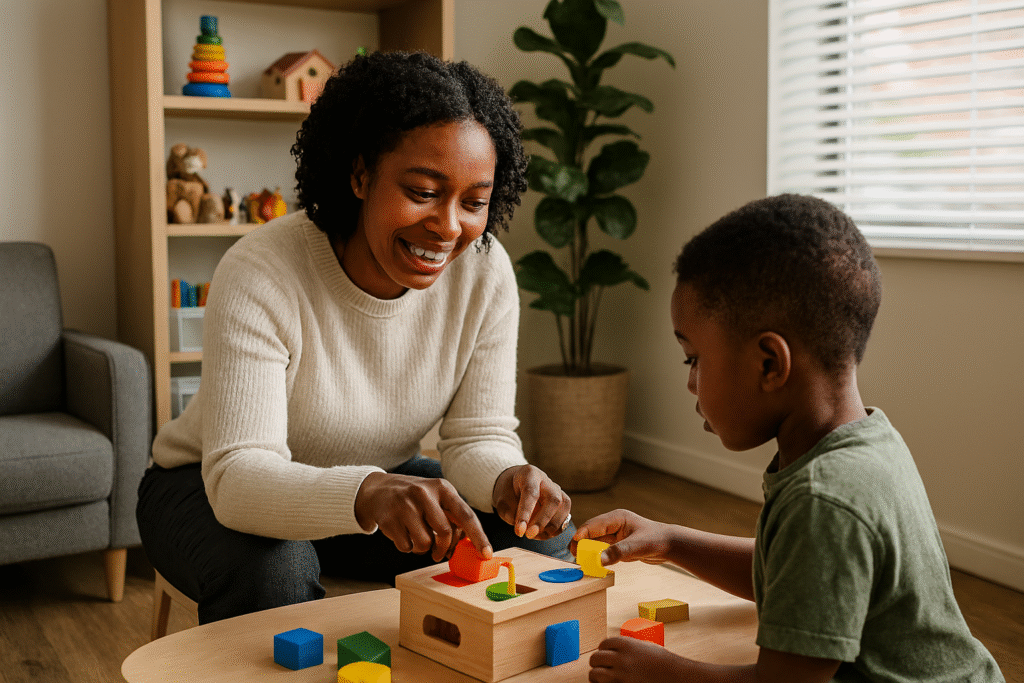
Children learn best when they are engaged, curious, and having fun. For many children, especially those with developmental delays, learning through play is not just enjoyable, it is essential. Play-based therapy uses structured play activities to help children develop physical, emotional, social, and cognitive skills in a natural and supportive way. In Lagos and across Nigeria, more parents are turning to play therapy for children as a trusted approach to child growth support. This article explains how play-based therapy works, why it is effective, and how it supports healthy development at every stage.
What Is Play-based Therapy for Children?
Play-based therapy for children is a therapeutic approach that uses play as the primary tool for learning and development. Rather than relying on rigid instruction, therapists guide children through purposeful activities that feel natural and enjoyable. These activities are carefully designed to build skills while allowing children to express themselves freely.
In therapy settings, play may include games, toys, movement activities, pretend play, puzzles, and sensory experiences. Each activity serves a developmental goal, such as improving attention, communication, emotional regulation, or motor coordination. Because play is a child’s natural language, this approach helps therapists connect with children in a way that feels safe and motivating.
Why Play-Based Therapy Is Effective for Child Development
Play-based therapy works because it meets children where they are. When children feel relaxed and engaged, they are more open to learning new skills. Instead of pressure or frustration, play creates positive experiences that build confidence and resilience.
Through play-based therapy for children, therapists can observe how a child thinks, moves, communicates, and responds to challenges. This insight allows therapy sessions to be tailored to each child’s unique needs. Over time, children begin to transfer the skills they learn during therapy into everyday life, including school, home routines, and social interactions.
Developmental Therapy Activities Used in Play-Based Therapy
Developmental therapy activities are at the heart of play-based therapy. These activities are carefully selected to support specific areas of development while still feeling fun and engaging.
Cognitive and Learning Skills
Activities such as puzzles, sorting games, and memory tasks help children develop problem-solving skills, attention, and understanding of cause and effect. These skills are essential for school readiness and academic success.
Communication and Language Development
Play-based therapy often includes storytelling, role-play, and interactive games that encourage children to express themselves. These activities support vocabulary growth, sentence formation, and social communication skills.
Emotional and Social Development
Through pretend play and group activities, children learn to recognize emotions, manage frustration, and interact with others. Play therapy helps children practice taking turns, sharing, and responding appropriately in social situations.
Physical and Motor Development
Many developmental therapy activities involve movement, coordination, and strength. Climbing, balancing, drawing, and building all contribute to improved motor skills and body awareness.
How Play-based Therapy Supports Child Growth at Different Ages
Play-based therapy is adaptable and effective across different stages of childhood.
Early Childhood
For younger children, play therapy focuses on foundational skills such as sensory processing, early communication, and basic motor development. These early interventions provide strong child growth support and help prevent future learning challenges.
Preschool and School-Age Children
As children grow, play-based therapy becomes more goal-oriented. Activities are designed to support school readiness, handwriting, attention, and peer interaction. Play continues to be a powerful tool for learning, even as expectations increase.
Role of Therapists in Play-Based Therapy
Therapists play an active role in guiding play-based sessions. They create a structured environment while allowing children to lead play when appropriate. This balance helps children feel in control while still working toward therapeutic goals.
Therapists also involve parents by explaining the purpose behind each activity. This allows families to continue developmental therapy activities at home, reinforcing progress and building consistency across environments.
Benefits of Play Therapy for Children
The benefits of play therapy for children extend beyond the therapy room.
• Improved attention and focus
• Better emotional regulation
• Stronger communication skills
• Increased confidence and independence
• Positive social interactions
• Reduced anxiety and behavioral challenges
Because therapy feels like play, children are more willing to participate and stay engaged over time.
Flashcells Therapy Approach to Play-Based Therapy
At Flashcells Therapy, play-based therapy is central to how child development is supported. Therapists design sessions that are engaging, purposeful, and tailored to each child’s developmental needs. Therapy goals are addressed through meaningful play rather than rigid instruction.
Flashcells Therapy integrates play therapy with occupational therapy, speech therapy, and behavioral support when needed. Parents are actively involved and receive guidance on how to use developmental therapy activities at home. Progress is monitored closely to ensure each child continues to grow and build confidence.
How Parents Can Support Play-Based Therapy at Home
Parents play a critical role in reinforcing therapy progress. Simple daily activities can support a child’s growth when done consistently.
Encourage free play and exploration without pressure. Use everyday routines such as mealtime and bath time for conversation and interaction. Celebrate small milestones and stay patient throughout the process. When play is positive and relaxed, learning happens naturally.
Conclusion
Play-based therapy is a powerful way to support child development while honoring how children naturally learn. Through play therapy for children, developmental therapy activities become opportunities for growth, confidence, and connection. Whether a child is facing developmental delays or needs extra support, play-based therapy provides lasting support for meaningful child growth.
If you are looking for professional play-based therapy in Lagos, Flashcells Therapy provides personalized, child-centered services designed to help children thrive. Book a consultation with Flashcells Therapy today and take the next step in supporting your child’s development.