
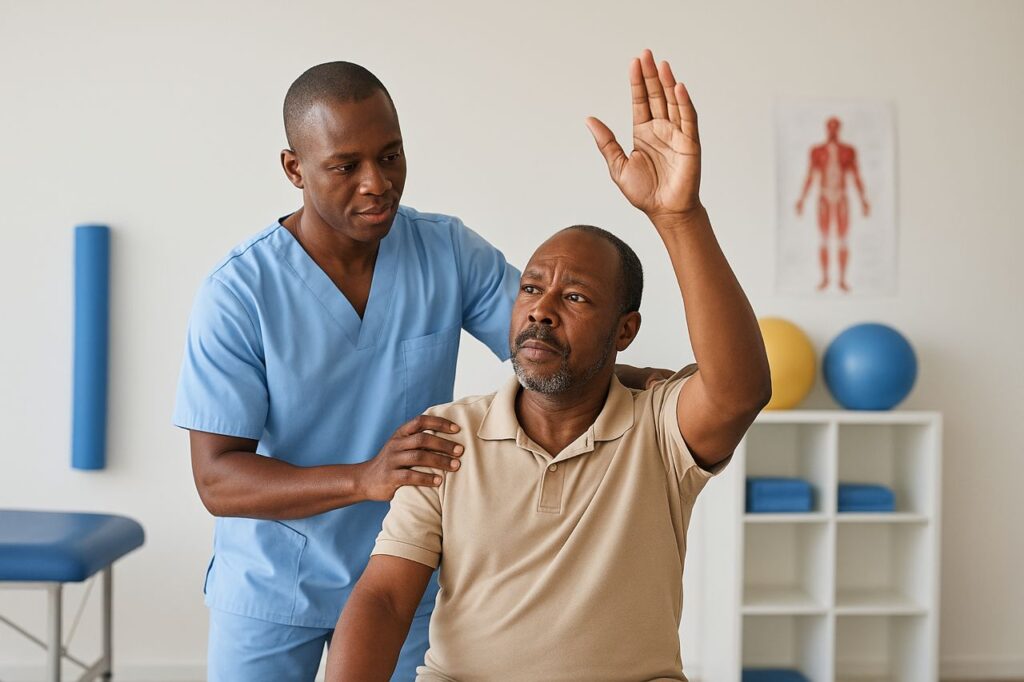
Stroke remains one of the leading causes of long-term disability in Nigeria. Many survivors struggle with movement, balance, speech, and basic daily activities long after the medical emergency has passed.
This is why stroke rehabilitation is essential — it helps survivors regain independence, rebuild confidence, and return to meaningful daily life. In Lagos, physiotherapy clinics play a crucial role in providing structured, expert-guided rehabilitation that supports long-term recovery.
Understanding Stroke Rehabilitation in Nigeria
Stroke rehabilitation refers to the therapeutic process that helps stroke survivors relearn skills affected by the brain injury.
Depending on the severity of the stroke, individuals may experience difficulty walking, speaking clearly, using their hands, or performing everyday tasks such as bathing, cooking, or writing.
In Nigeria, stroke survivors commonly face:
- Muscle weakness or paralysis on one side of the body.
- Difficulty with coordination and balance.
- Challenges with speech or swallowing.
- Reduced independence in daily activities.
- Emotional changes such as frustration or anxiety.
Stroke rehabilitation in Nigeria focuses on addressing these challenges through evidence-based techniques. The goal is simple: restore as much function as possible and help survivors return to their normal routines.
Why Physiotherapy Matters After a Stroke
Physiotherapy is the backbone of stroke rehabilitation. Without targeted physical therapy, many survivors experience long-term complications that limit mobility and independence.
Here’s how physiotherapy supports recovery:
Restoring Strength and Mobility
After a stroke, muscles may become weak or stiff. Physiotherapists use strengthening exercises to improve muscle power, flexibility, and endurance, making movement easier and more controlled.
Improving Balance and Coordination
Falls are common among stroke survivors. Physiotherapy includes balance training to help patients stand, sit, and walk safely.
Enhancing Walking Ability
Many survivors struggle with dragging their feet, uneven steps, or difficulty lifting their legs. Gait training helps improve walking patterns using repetitive exercises and assistive devices when needed.
Preventing Complications
Without therapy, survivors may develop muscle tightness, joint stiffness, pressure sores, or decreased cardiovascular endurance. Physiotherapy helps prevent these issues early.
Boosting Confidence and Independence
Every regained movement — from lifting a cup to walking again — builds emotional strength and improves quality of life.
What to Expect at a Physiotherapy Clinic in Lagos
A reputable physiotherapy clinic in Lagos follows a structured approach to stroke rehabilitation. Here’s what patients and families can expect during their sessions:
A Thorough Initial Assessment
The physiotherapist evaluates:
- The patient’s level of mobility.
- Muscle strength and joint flexibility.
- Balance and coordination.
- Ability to perform daily tasks.
- Medical history and current limitations.
This assessment guides the personalized treatment plan.
Individualized Treatment Plans
No two stroke survivors are the same. Treatment plans are tailored to match each patient’s abilities, goals, and stage of recovery.
Use of Modern Rehabilitation Techniques
Many clinics use equipment such as parallel bars, balance trainers, resistance tools, and electrical stimulation devices to support recovery.
Collaboration With Caregivers
Family members are often trained to assist with home exercises and support the patient’s progress outside the clinic.
This collaborative approach ensures continuity of care both inside and outside therapy sessions.
Techniques Used in Stroke Rehabilitation
Physiotherapy clinics in Lagos use various techniques to help survivors regain function. These include:
Strengthening Exercises
These target weakened muscles, especially in the arms, legs, and core. Stronger muscles make it easier for patients to stand, walk, and perform daily activities.
Gait Training
Therapists help survivors practice walking using techniques that improve posture, step length, and stability.
Balance and Coordination Training
Exercises using foam pads, balance boards, and structured movements help reduce falls and improve overall stability.
Functional Training
This focuses on real-life tasks such as sitting up, standing from a chair, climbing stairs, lifting objects, and using the hands for daily routines.
Home Exercise Programs
Therapists provide simple routines for patients to practice every day. These exercises accelerate recovery and make clinic sessions more effective.
Benefits of Stroke Rehabilitation in Nigeria
Consistent physiotherapy offers significant benefits for survivors, including:
- Faster recovery and improved mobility.
- Reduced risk of long-term disability.
- Increased independence in daily activities.
- Better physical and emotional well-being.
- A smoother reintegration into family, work, and community life.
- Prevention of complications such as stiffness, falls, and muscle loss.
These benefits highlight why early access to stroke rehabilitation is essential.
Flashcells Therapy Approach
Flashcells Therapy provides specialized stroke rehabilitation at its physiotherapy clinic in Lagos. The clinic focuses on a patient-centered approach that addresses each survivor’s unique needs.
Here’s what sets Flashcells Therapy apart:
- Experienced physiotherapists trained in stroke rehabilitation.
- Comprehensive assessments and detailed recovery plans.
- Evidence-based techniques to improve strength, mobility, and balance.
- Modern rehabilitation tools to support faster progress.
- Family and caregiver involvement to enhance home-based recovery.
- Regular progress reviews to ensure consistent improvement.
Flashcells Therapy creates a supportive environment that promotes confidence, hope, and measurable results.
Practical Tips for Stroke Survivors and Families
Recovery requires teamwork between the clinic and the home environment. Here’s how families can support progress:
- Attend physiotherapy sessions consistently.
- Practice home exercises daily.
- Encourage positive reinforcement and celebrate progress.
- Ensure proper nutrition, hydration, and rest.
- Stay patient — stroke recovery takes time, but every step counts.
- Keep communication open between the family and the physiotherapist.
Conclusion
Stroke rehabilitation in Lagos is essential for restoring movement, confidence, and independence. Physiotherapy remains the most effective approach for helping survivors rebuild their lives. If you’re in Lagos, getting professional help early can make a life-changing difference.
Flashcells Therapy offers expert stroke rehabilitation designed to support long-term recovery. With experienced therapists and a patient-focused approach, the clinic provides the care survivors need to regain strength and independence.
👉 Book a stroke rehabilitation assessment at Flashcells Therapy today and take the first step toward recovery.